

 Pay My Bill
 Call: (203) 869-1145
 Online Scheduling
Where It Hurts: My Hand or Wrist
Your hand and wrist are full of dozens of bones and tiny joints, providing your range of motion and function. All those muscles, nerves, and tendons can become irritated, causing pain.
Hands and wrists are prone to traumatic injury, due to falls or other accidents, as well as sports injuries. Overuse injuries can cause pain and loss of function. Learn more about hand and wrist pain and how the hand and upper extremity surgeons and sports medicine specialists at Orthopaedic & Neurosurgery Specialists (ONS) can help.
Common Hand and Wrist Injuries and Conditions
We see patients with all types of hand and wrist pain, and the most common injuries and conditions we treat are:
- Arthritis: Arthritis causes pain and swelling in your joints. Arthritis can happen over time as your cartilage wears out (osteoarthritis). Some people have rheumatoid arthritis (RA), an autoimmune condition that often affects the small joints of the hands and fingers.
- Carpal tunnel syndrome: When a nerve in the wrist gets pinched it can cause numbness and tingling in the fingers. This tends to be worse at night when sleeping.
- Finger injuries: You can tear tendons in fingers, which can make it hard to straighten your finger (like mallet finger). Sprains, which are stretched ligaments can cause pain and stiffness in the fingers.
- Ganglion cysts: Ganglions are fluid-filled lumps that form in your wrist or fingers. They aren’t harmful, but cause pain or discomfort in some people.
- Tendonitis: Tendonitis means an irritated tendon. A common type in wrists is De Quervain tendonitis. This causes pain over the thumb side of your wrist, which can be worse when you make a fist, grasp, or pinch.
- Thumb sprains: A sprain is a stretch of a ligament. With the thumb, this often happens because you jam or bend your thumb too far. Thumb sprains cause swelling and bruising, and are usually very painful to move.
- Wrist and hand fractures: There are many bones in the hand and wrist that can be fractured. They can be treated with anything from simple buddy taping to a cast. Fractures typically cause pain and swelling.
We see patients with all types of hand and wrist pain, and the most common injuries and conditions we treat are:
- Arthritis: Arthritis causes pain and swelling in your joints. Arthritis can happen over time as your cartilage wears out (osteoarthritis). Some people have rheumatoid arthritis (RA), an autoimmune condition that often affects the small joints of the hands and fingers.
- Carpal tunnel syndrome: When a nerve in the wrist gets pinched it can cause numbness and tingling in the fingers. This tends to be worse at night when sleeping.
- Finger injuries: You can tear tendons in fingers, which can make it hard to straighten your finger (like mallet finger). Sprains, which are stretched ligaments can cause pain and stiffness in the fingers.
- Ganglion cysts: Ganglions are fluid-filled lumps that form in your wrist or fingers. They aren’t harmful, but cause pain or discomfort in some people.
- Tendonitis: Tendonitis means an irritated tendon. A common type in wrists is De Quervain tendonitis. This causes pain over the thumb side of your wrist, which can be worse when you make a fist, grasp, or pinch.
- Thumb sprains: A sprain is a stretch of a ligament. With the thumb, this often happens because you jam or bend your thumb too far. Thumb sprains cause swelling and bruising, and are usually very painful to move.
- Wrist and hand fractures: There are many bones in the hand and wrist that can be fractured. They can be treated with anything from simple buddy taping to a cast. Fractures typically cause pain and swelling.
Physicians
Showing 4 of 4Showing 4 of 4 Frank Aversano, MD
 Matthew B. Cantlon, MD
 Chief of Orthopaedic Surgery at Greenwich HospitalMark A. Vitale, MD, MPH
 Chief Clinical Informatics OfficerDavid Wei, MD, MS
 Chief of Orthopaedic Surgery at Greenwich HospitalChief Clinical Informatics Officer
News & Blogs
 PhysiatryPhysician Spotlight on Dr. Charles Kent

Expert:Charles Kent, DO
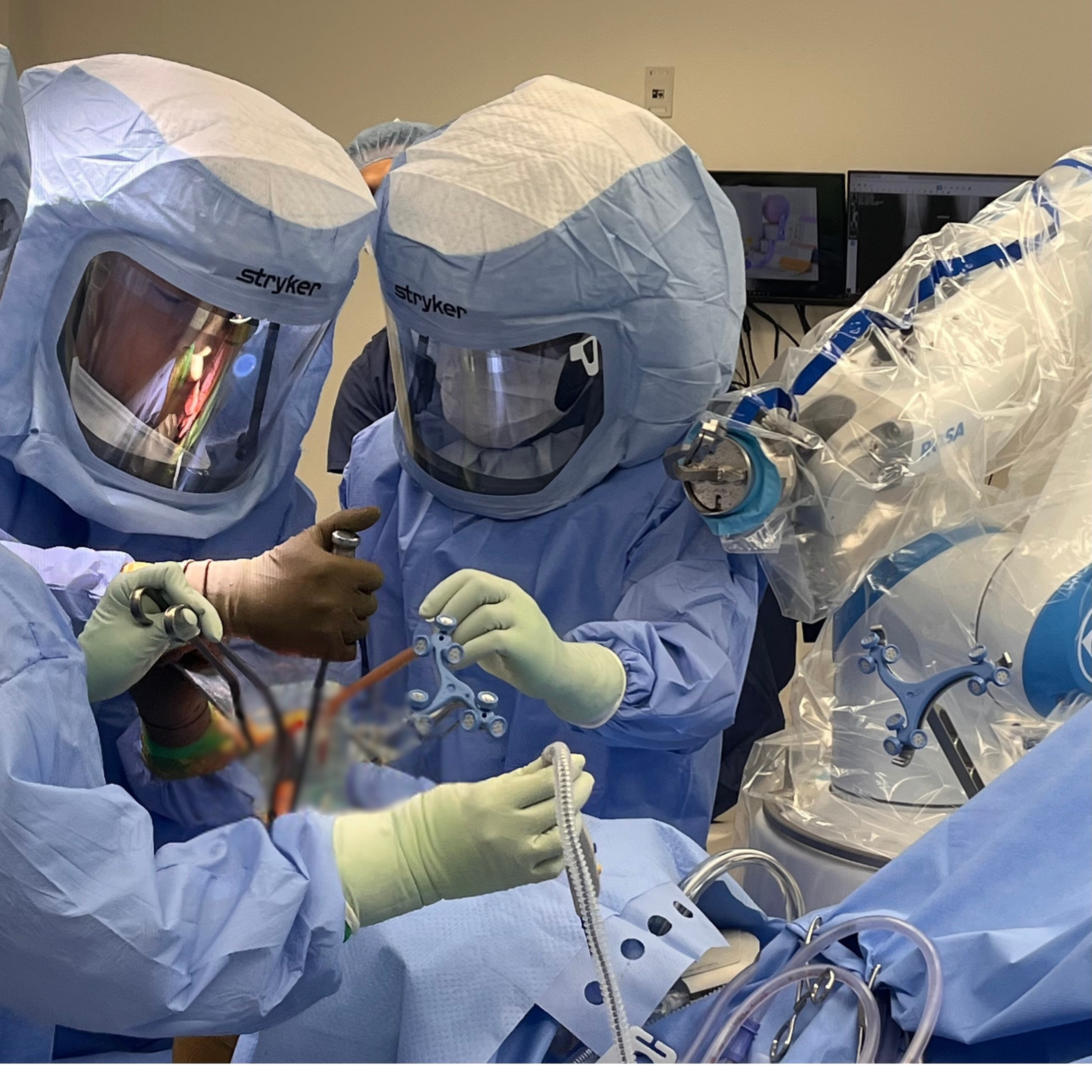 Hip and Knee ReplacementONS is First in CT to Offer Robotic Total Knee Replacement with Rosa-OptimiZe Technology

Expert:Kevin J. Choo, MD
 U.S. News & World Report Names The Stamford Ambulatory Surgical Center Best Ambulatory Surgery Center For Third Straight Year